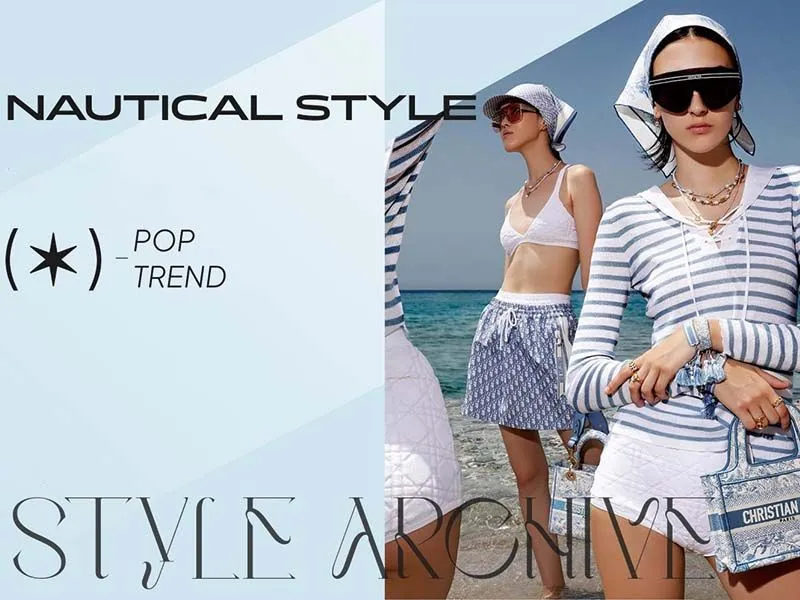
As a veteran in the foreign trade garment industry with years of experience, I have closely followed the evolution of global fashion trends. In the 26/27 Fall/Winter forecasts, ‘Nautical Style’ has returned with a powerful presence. This style, rooted in 19th-century naval uniforms, has now broken through traditional sports and resort boundaries to merge perfectly with the currently popular ‘Quiet Luxury’ aesthetic, becoming a key choice for urban women to showcase confidence and effortless charm. Below, I will provide a deep analysis of the evolution and core applications of this style based on professional industry insights.
I. Origins: Order & Freedom The roots of Nautical Style can be traced back to the 19th-century European naval uniform system. It is not just a set of clothing but a unique fashion language that cleverly blends the practicality and rigorous order of military uniforms with the spirit of exploration and free will of the Age of Discovery. After over a century of evolution, Nautical Style has transformed from rigid military dress into an all-scenario fashion style that combines functionality with elegance, suitable for everything from daily commuting to leisure vacations.
II. Colors: Modern Maritime Soul
1. Classic Foundation Mid-night Blue (symbolizing the deep ocean), Ivory White (representing sea foam and sails), and Sand (echoing the coastline) serve as base colors.
2. Modern Advancement A transition towards low-saturation ‘Fog Blue’ and ‘Light Khaki’ adds more sophistication and urban flair.
3. Matching Logic Moving away from high-saturation clashing traditions, the trend favors monochromatic gradients or soft light-dark contrasts, making the visual effect more composed and grand.
Moving away from high-saturation clashing traditions, the trend favors monochromatic gradients or soft light-dark contrasts, making the visual effect more composed and grand.
III. Elements: Minimalist Details Dynamic Stripes: Traditional horizontal stripes are evolving into pinstripes, irregular spacing, and asymmetrical patterns, breaking the monotony and adding flow. Hardware & Accents: Iconic double-breasted metal buttons remain the soul, but designs are becoming flatter and more minimalist, sometimes even using concealed fasteners to maintain a clean silhouette. Symbolic Art: Traditional elements like anchors, ropes, and sailboats no longer appear as large patches but are transformed into exquisite prints, precision embroidery, or custom labels, showcasing understated taste. Shoulder Details: Functional epaulettes and badge designs have become smaller or detachable, increasing the versatility of the garment across multiple scenarios.
IV. Fabrics & Silhouettes: Coast to City
V. Scenarios & Fusion Urban Commuter: Navy blazers paired with crisp striped shirts and high-waisted wide-leg trousers highlight the professional quality of career women. Resort Romantic: Lightweight chiffon striped dresses and breathable linen shirts with anchor or seashell accessories create a relaxed atmosphere. Creative Cross-over: Nautical elements are deeply colliding with Bohemian (fringe, embroidery), Preppy (sailor collars on knit vests), and even Futuristic styles (metallic textures and geometric cuts), fostering more diverse fashion expressions.
Ⅵ.Summary The 26/27 FW Nautical Style is not just a cycle of fashion but a profound interpretation of the ‘Quiet Luxury’ lifestyle. For those of us in the foreign trade clothing industry, this trend reminds us to keep pace with the changing needs of global elite consumers: return to quality, integrate ‘invisible’ functionality into classics, and seek expression within order. The enduring vitality of Nautical Style lies in its ability to provide functional assurance while granting the wearer an effortless air of composure.